Types of Roof Ventilation: A Homeowner's Guide
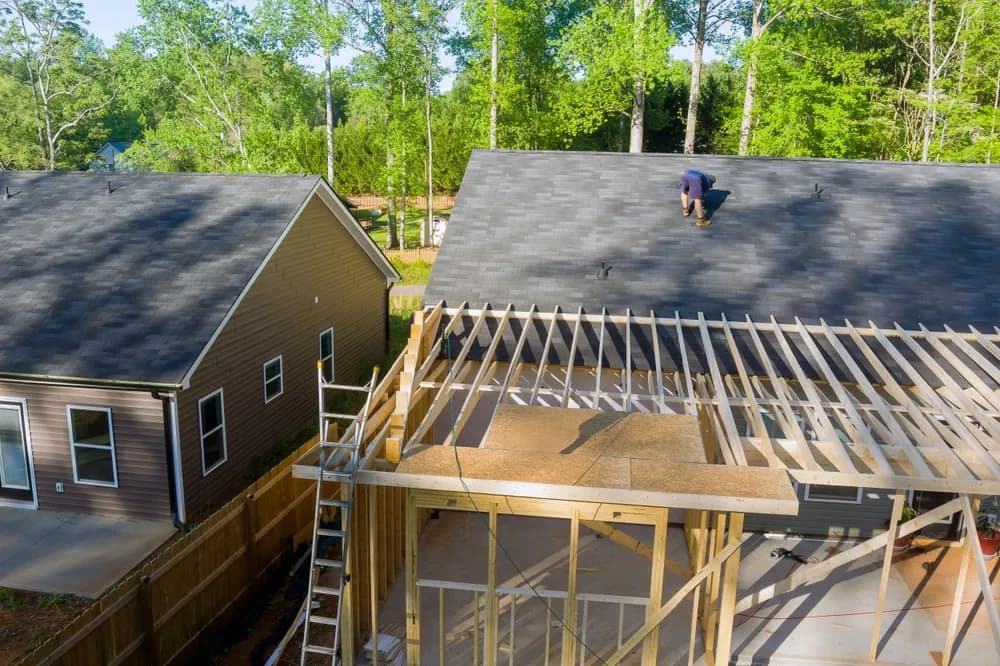
Roof ventilation is a system of intake and exhaust openings that allows air to flow through your attic space. Proper ventilation removes excess heat and moisture from the attic, which protects your shingles from premature aging, prevents moisture damage to your roof decking, and reduces your cooling costs in summer.
There are several types of roof vents, and they work best when paired correctly. This guide covers the most common types, how they function, and what combination works best for different roof designs.
How Roof Ventilation Works
Effective attic ventilation relies on a simple principle: hot air rises. A balanced ventilation system has intake vents low on the roof (usually at the soffits) and exhaust vents high on the roof (at or near the ridge). Cool outside air enters through the intake vents, flows upward across the underside of the roof deck, picks up heat and moisture, and exits through the exhaust vents at the top.
This continuous airflow keeps attic temperatures closer to outside temperatures, which has several benefits:
- Prevents heat buildup that degrades shingles from below
- Removes moisture that causes mold, rot, and decking damage
- Reduces the load on your air conditioning system in summer
- Prevents ice dams in winter by keeping the roof surface uniformly cold
The industry standard is 1 square foot of net free ventilation area (NFA) for every 150 square feet of attic floor space, or 1:150. If the system is balanced (equal intake and exhaust) and there's a proper vapor barrier, this can be relaxed to 1:300. Most shingle manufacturers require proper ventilation as a condition of their warranty.
Exhaust Vents (High on the Roof)
Ridge Vents
Ridge vents run along the peak (ridge) of the roof and are the most popular exhaust ventilation method in modern residential construction. A gap is cut along the ridge, and a low-profile vent strip is installed over it, then covered with ridge cap shingles that match the roof.
Pros: Provides uniform ventilation along the entire ridge; virtually invisible from the ground; no moving parts to fail; works with natural convection and wind; provides the best balanced airflow when paired with soffit intake vents.
Cons: Only works effectively when paired with adequate soffit intake vents; less effective on roofs with short ridges or complex geometries where the ridge line is minimal; requires proper installation to prevent rain and snow infiltration.
Box Vents (Static Vents)
Box vents are small square or rectangular vents installed in holes cut near the ridge line. They use natural convection — hot air rising out of the opening — to exhaust attic air. Multiple box vents are typically needed to provide adequate ventilation.
Pros: Inexpensive; no moving parts; easy to install; good option for complex roofs where a continuous ridge vent isn't practical.
Cons: Less efficient than ridge vents because they create point ventilation rather than continuous ventilation; aesthetically visible on the roof; need multiple units to cover the same area as a ridge vent.
Turbine Vents (Whirlybirds)
Turbine vents are dome-shaped vents with internal fins that spin when wind blows across them. The spinning motion creates suction that actively pulls air from the attic. When there's no wind, they still function as passive exhaust vents.
Pros: Move significantly more air than static box vents when the wind is blowing; no electricity required; relatively inexpensive.
Cons: The spinning mechanism can wear out and become noisy over time; effectiveness drops to near zero in calm conditions; some homeowners don't like their appearance; bearings may need lubrication or replacement.
Power Vents (Attic Fans)
Power vents use an electric motor to actively pull hot air from the attic. They typically mount on the roof or in a gable wall and are controlled by a thermostat that activates the fan when attic temperature reaches a set point (usually 100-110°F). Solar-powered models are also available.
Pros: Move large volumes of air quickly; can dramatically reduce attic temperatures; solar models have zero operating cost; effective on days with no wind.
Cons: Electric models add to your utility bill; the motor will eventually need replacement (5-15 year lifespan); if the attic doesn't have adequate soffit intake vents, power vents can create negative pressure that pulls conditioned air from the living space through ceiling gaps, actually increasing your energy costs; can conflict with ridge vents by short-circuiting the airflow pattern.
Gable Vents
Gable vents are louvered openings installed in the gable walls (the triangular end walls) of the attic. Air enters one gable vent and exits the other, driven by cross-breezes.
Pros: Simple and inexpensive; provide some attic ventilation on homes without soffit or ridge vents; can serve double duty as visual architectural elements.
Cons: Much less effective than ridge/soffit systems because they only ventilate along the horizontal plane, leaving the peak of the attic poorly ventilated; effectiveness depends entirely on wind direction and speed; should generally not be used in combination with ridge vents, as they can short-circuit the ridge vent's airflow by pulling air in from the gable instead of up from the soffits.
Intake Vents (Low on the Roof)
Soffit Vents
Soffit vents are installed in the soffit panels (the underside of the roof overhang). They're the most common and most effective intake vent because they're positioned at the lowest point of the roof, allowing cool air to enter and flow upward naturally.
Soffit vents come in several styles:
- Continuous strip vents: A long narrow vent that runs the full length of the soffit. Provides the most uniform intake airflow.
- Individual vents: Round or rectangular vents spaced at regular intervals along the soffit. Less uniform than continuous vents but easier to retrofit.
- Perforated soffit panels: The entire soffit panel has tiny holes that allow air to pass through. Provides uniform intake with a clean appearance.
Important: Soffit vents only work if the air path from the soffit to the attic is clear. Insulation blown against the underside of the roof deck can block soffit vents from the inside. Proper installation includes baffles (also called chutes or rafter vents) that create a channel for air to flow from the soffit into the attic above the insulation.
Drip Edge Vents
For homes without traditional soffits (or with very narrow soffits), drip edge vents combine the function of a drip edge with an intake vent. They're installed at the eave and allow air to enter the attic from the roof edge. These are a specialized product for situations where standard soffit vents aren't feasible.
Ventilation Combinations That Work
The most effective ventilation uses matched intake and exhaust:
Best combination: Continuous ridge vent (exhaust) + continuous soffit vents (intake). This provides the most uniform, balanced airflow across the entire attic.
Good alternative: Box vents or turbine vents (exhaust) + soffit vents (intake). Effective when ridge vent isn't practical.
Avoid mixing: Don't combine ridge vents with power vents, or ridge vents with gable vents. Different exhaust types can interfere with each other's airflow patterns, reducing overall effectiveness.
Signs of Inadequate Ventilation
How do you know if your current ventilation isn't working? Watch for these signs:
- Extremely hot second floor or upstairs rooms in summer
- Ice dams forming at the eaves in winter
- Moisture, mold, or mildew visible in the attic
- Decking or rafters that look damp or stained
- Shingles curling, buckling, or aging faster than expected
- Paint peeling on soffits, fascia, or upper exterior walls
- Rust on metal components in the attic (nail tips, strapping, HVAC components)
If you're noticing any of these issues, a ventilation assessment is a smart first step. Improving ventilation is often one of the most cost-effective upgrades you can make to extend the life of your roof and improve your home's comfort.
Get a Ventilation Assessment
Peak Roofing evaluates attic ventilation as part of every free roof inspection. We'll check your current intake and exhaust setup, identify any deficiencies, and recommend the most effective solution for your roof design.
Call us at (704) 313-9341 or schedule your inspection online.
Need Help with Your Roof?
Contact Peak Roofing today for a free roof inspection and estimate. Our experienced team is here to help Charlotte homeowners.