Ice and Water Shield: What It Is and Why Your Roof Needs It
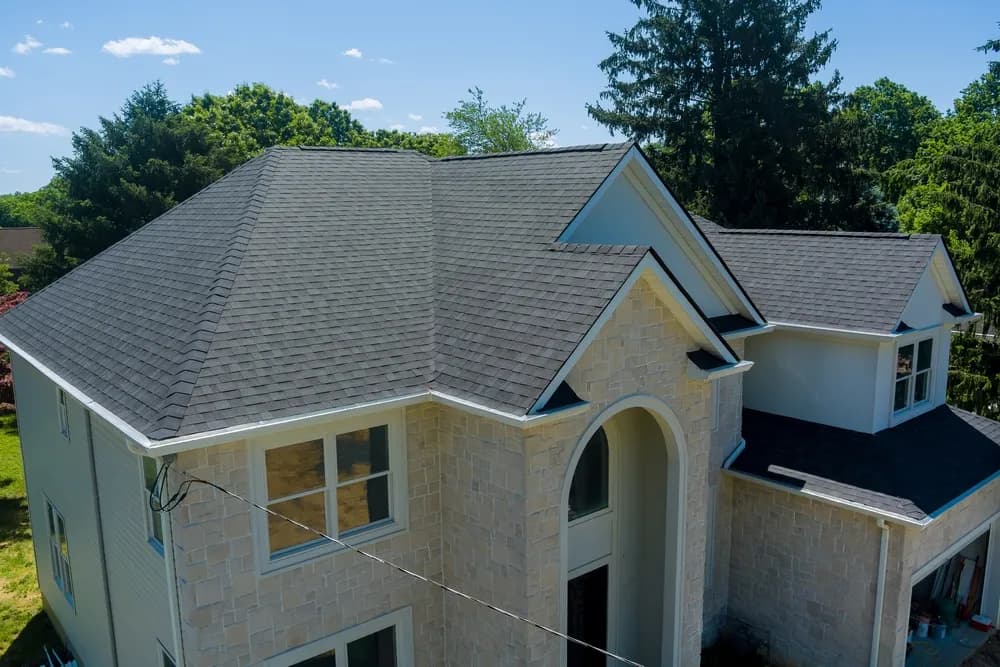
Ice and water shield is a self-adhesive, waterproof membrane installed directly on the roof deck beneath your shingles. It provides a secondary waterproof barrier in areas of the roof most vulnerable to leaks — particularly along eaves, in valleys, and around penetrations where water can back up or pool.
While standard roofing underlayment is water-resistant, ice and water shield is fully waterproof. When a roofing nail penetrates it, the rubberized asphalt compound seals tightly around the nail shaft, preventing water from entering the hole. Standard underlayment can't do this — water that reaches a nail penetration in felt or synthetic underlayment can seep through.
How Ice and Water Shield Works
Ice and water shield is made of two main components: a rubberized asphalt adhesive layer and a polyethylene film backing. The rubberized asphalt is what gives it the self-sealing property — it's sticky enough to bond directly to clean, dry roof decking without fasteners, and it stays pliable enough to seal around nails driven through it.
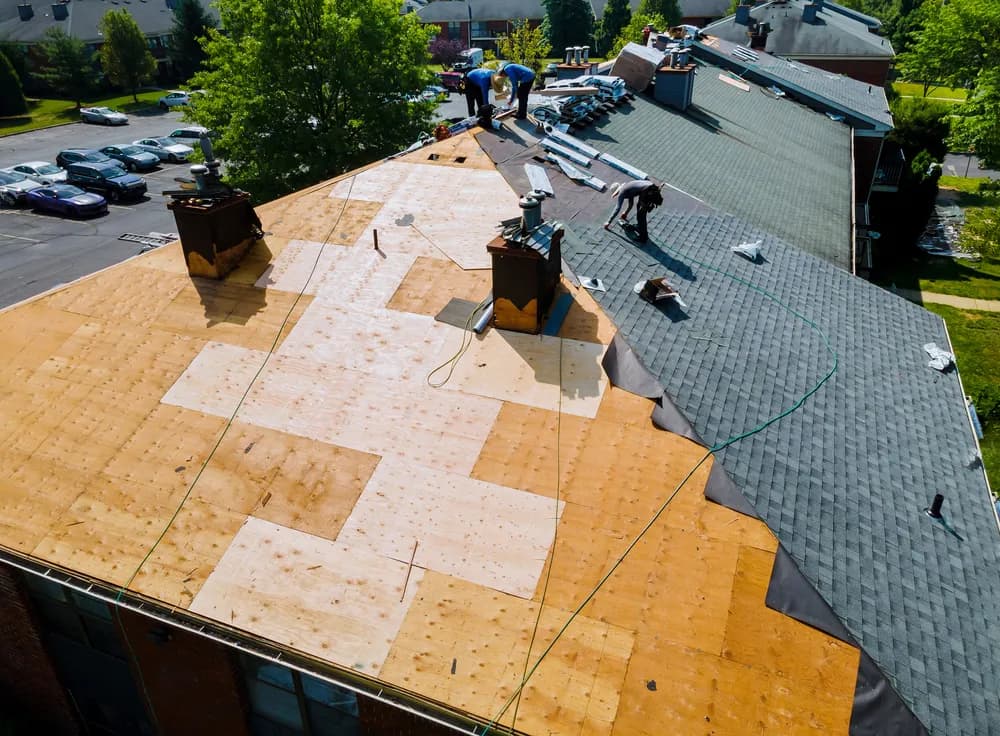
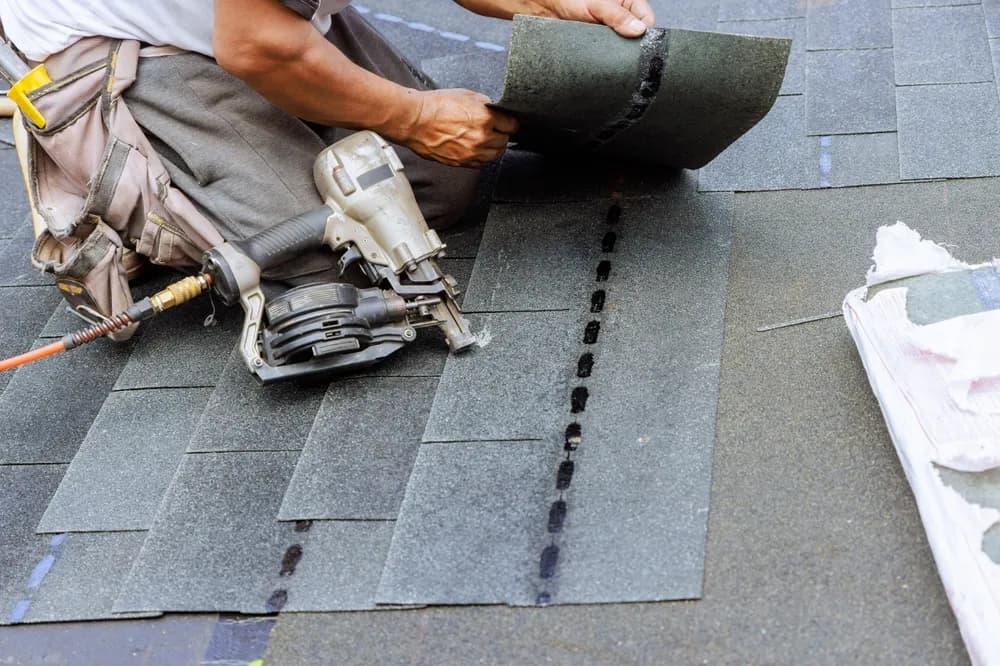
The product comes in rolls, typically 36 inches wide and 65-75 feet long. During installation, the peel-and-stick membrane is applied directly to the roof deck starting at the lowest edge (eave line) and working upward. Seams overlap by at least 3-4 inches to maintain a continuous waterproof layer.
Once shingles are installed over it, the ice and water shield acts as a hidden safety net. If water manages to get under or through the shingles — from ice dams, wind-driven rain, or shingle damage — the membrane blocks it from reaching the decking.
Where Ice and Water Shield Is Installed
Ice and water shield isn't used across the entire roof (though some homeowners opt for full-deck coverage). It's strategically placed in the areas most likely to experience water intrusion:
Eaves (Roof Edges Above Gutters)
This is the most critical location. In cold climates, ice dams form at the roof's edge when heat from the attic melts snow higher on the roof, and the meltwater refreezes at the colder eave. The ice dam creates a pool of water that backs up under the shingles. Without ice and water shield, this water saturates the decking and leaks into the home.
Building codes in cold-climate zones typically require ice and water shield from the eave edge to at least 24 inches inside the exterior wall line. Even in warmer climates where ice dams are rare, ice and water shield at the eaves provides protection against wind-driven rain and gutter backup.
Valleys
Roof valleys concentrate water runoff from two adjacent roof planes into a single channel. The volume of water flowing through valleys during heavy rain is significantly higher than on the surrounding roof surfaces. Ice and water shield in valleys provides backup protection in case valley flashing fails or water finds its way under the metal.
Around Penetrations
Anywhere something pokes through the roof — vent pipes, chimneys, skylights, exhaust vents — is a potential leak point. Wrapping ice and water shield around these penetrations creates an additional waterproof barrier behind the flashing. This is particularly important around chimneys, where flashing systems are complex and failures are common.
Low-Slope Areas
Some roofs have sections with a shallow pitch — porches, dormers, additions. Low-slope areas shed water more slowly, increasing the chance of water working under the shingles. Full coverage of ice and water shield on low-slope sections provides critical protection.
Sidewalls and Headwalls
Where the roof meets a vertical wall, water can be driven behind the siding and into the wall-to-roof junction. Ice and water shield at these transitions adds another layer of protection behind the step flashing.
Ice and Water Shield vs. Standard Underlayment
Both ice and water shield and standard underlayment go on the roof deck beneath the shingles. Here's how they compare:
Standard felt underlayment (15 lb or 30 lb):
- Water-resistant but not waterproof
- Stapled or nailed to the deck — doesn't self-seal around fasteners
- Can tear in high winds if left exposed
- Very affordable — roughly $10-15 per square
- Suitable for the main field of the roof where water moves freely downhill
Synthetic underlayment:
- More water-resistant than felt, lighter, and stronger
- Cap-nailed to the deck — doesn't self-seal around fasteners
- Resists tearing better than felt
- Moderate cost — roughly $15-30 per square
- Increasingly popular as a felt replacement for the main roof field
Ice and water shield:
- Fully waterproof — a true moisture barrier
- Self-adhesive — bonds directly to the deck with no fasteners needed
- Self-sealing — the rubberized compound seals around nail penetrations
- Higher cost — roughly $50-80 per square
- Used in targeted areas or full-deck for maximum protection
Is Full-Deck Ice and Water Shield Worth It?
Some homeowners ask about applying ice and water shield across the entire roof deck rather than just in the standard locations. Full-deck application provides maximum leak protection, but there are trade-offs to consider:
Advantages of full-deck coverage:
- Complete waterproof protection across the entire roof
- Added wind resistance — shingles are partially bonded to the sticky membrane surface
- Better protection if shingles are ever damaged or blown off in a storm
Considerations:
- Significant cost increase — $400-800 more per square compared to synthetic underlayment
- The membrane reduces the roof deck's ability to dry out if moisture does get trapped, so proper ventilation becomes even more critical
- Some manufacturers require ventilation minimums to be met for warranty purposes when full-deck membrane is used
For most homes, the standard approach — ice and water shield at eaves, valleys, penetrations, and vulnerable areas, with synthetic underlayment on the rest — provides excellent protection at a reasonable cost. Full-deck coverage makes the most sense in areas with extreme weather exposure or on complex roof designs with many vulnerable areas.
Building Code Requirements
The International Residential Code (IRC) and most local building codes require ice and water shield in specific locations:
- Cold climates: Required at eaves in areas where the average daily temperature in January is 25°F or less (IECC Climate Zones 5 and above)
- Valleys: Required or recommended in most jurisdictions
- Around penetrations: Recommended by most building codes and required by most shingle manufacturers for warranty purposes
In milder climates, ice and water shield may not be strictly code-required at eaves, but most experienced roofers install it anyway. The cost is modest, and the protection it provides against wind-driven rain and occasional severe weather is well worth it.
Installation Tips and Common Mistakes
Proper installation of ice and water shield requires attention to detail:
- Clean, dry deck required: The self-adhesive won't bond properly to wet, dirty, or dusty surfaces. If it's been raining, the deck needs to dry before application.
- Temperature matters: Most products require installation above 40-45°F for the adhesive to activate properly. In cold weather, a hand roller or torch may be needed to ensure bonding.
- Overlap seams correctly: Side laps should overlap at least 3.5 inches, end laps at least 6 inches, to maintain a continuous waterproof barrier.
- Don't leave it exposed: UV radiation degrades the membrane. Most products should be covered with shingles within 30-90 days of installation.
Get Expert Installation
Ice and water shield is one of those products that provides tremendous value when installed correctly and in the right locations. Peak Roofing uses ice and water shield on every roof we install, and we're happy to explain exactly where and why we place it during your estimate.
Call us at (704) 313-9341 or request a free estimate online.
Need Help with Your Roof?
Contact Peak Roofing today for a free roof inspection and estimate. Our experienced team is here to help Charlotte homeowners.