Roofing Underlayment Types Explained: Felt, Synthetic, and Peel-and-Stick
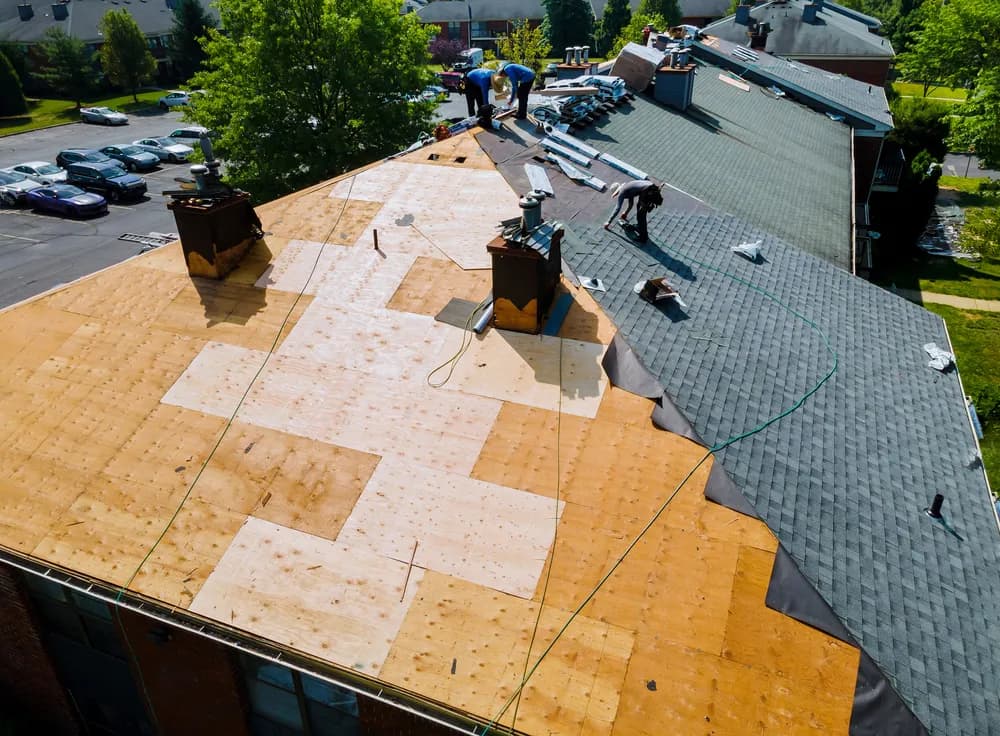
Roofing underlayment is a layer of material installed directly on top of your roof decking and underneath your shingles. It provides a secondary weather barrier that protects the deck from moisture if water gets under or through the shingles. The three main types are asphalt-saturated felt, synthetic, and peel-and-stick (self-adhering). Each has different characteristics, costs, and best-use applications.
Underlayment isn't visible on a finished roof, but it's one of the most important components of the roofing system. Choosing the right type — and ensuring it's installed correctly — directly affects how well your roof protects your home.
Asphalt-Saturated Felt (Tar Paper)
Felt underlayment has been used in roofing for over a century. It's made from a base mat of organic fibers (cellulose) or fiberglass, saturated with asphalt to make it water-resistant. It comes in two standard weights: 15-pound and 30-pound (these refer to the approximate weight per square — 100 square feet).
15-Pound Felt
The lighter option. Thinner, more flexible, and easier to handle. Meets minimum code requirements for most applications but offers less protection and durability than 30-pound felt. Most commonly used in warmer, drier climates where extreme weather exposure is less of a concern.
30-Pound Felt
Thicker, heavier, and more durable than 15-pound. Provides better water resistance and can withstand more foot traffic during installation without tearing. Required by some building codes and recommended by many contractors as the minimum for quality installation.
Pros of Felt Underlayment
- Low cost: The cheapest underlayment option at $10-15 per square installed
- Long track record: Proven performance over decades of use
- Breathable: Allows some moisture vapor to pass through, which can help the deck dry if minor moisture gets trapped
- Widely available: Sold at every building supply store
Cons of Felt Underlayment
- Tears easily: Can rip during installation, especially in windy conditions or with foot traffic
- Absorbs water: When wet, felt absorbs moisture and wrinkles. If left exposed to rain for more than a day or two, it can buckle and create an uneven surface under the shingles
- UV degradation: Deteriorates quickly when exposed to direct sunlight. Should not be left exposed for more than a few hours
- Heavier: Weighs more than synthetic, making it harder to carry up a ladder and handle on a steep roof
- Slippery when wet: Can be dangerous for workers walking on it during installation
Synthetic Underlayment
Synthetic underlayment is made from woven or spun polypropylene or polyethylene. It was introduced as a modern alternative to felt and has rapidly gained market share. Most professional roofing contractors now use synthetic as their standard underlayment for the main field of the roof.
Pros of Synthetic Underlayment
- Extremely tear-resistant: Much stronger than felt. Withstands foot traffic, wind, and the stresses of installation without ripping
- Lightweight: A roll of synthetic weighs significantly less than a comparable roll of felt, making it easier to carry and install
- Lies flat: Doesn't wrinkle or buckle when wet the way felt does
- UV resistant: Can be left exposed for weeks or even months (typically 30-180 days depending on the product) without degrading. This is critical on projects where weather delays may leave the underlayment exposed
- Larger rolls: Synthetic rolls cover more area than felt rolls, meaning fewer seams and faster installation
- Better traction: Most synthetic products have a non-skid surface that's safer to walk on than felt
- Water-shedding: Repels water rather than absorbing it
Cons of Synthetic Underlayment
- Higher cost: $15-30 per square installed — roughly double the cost of felt
- Less breathable: Doesn't allow moisture vapor to pass through as readily as felt. In most climates with proper ventilation, this isn't an issue, but in extreme cold climates it's worth considering
- Slippery for shingles: Some early synthetic products were so slick that shingles didn't grip well. Modern formulations have largely solved this with textured surfaces
Peel-and-Stick (Self-Adhering) Underlayment
Peel-and-stick underlayment, commonly known as ice and water shield, is a rubberized asphalt membrane with a self-adhesive backing. Unlike felt and synthetic, which are water-resistant, peel-and-stick is fully waterproof. It bonds directly to the deck and self-seals around nail penetrations.
Pros of Peel-and-Stick
- Fully waterproof: Creates a continuous waterproof barrier on the deck surface
- Self-sealing: The rubberized compound seals around nails driven through it, preventing water entry at fastener points
- Self-adhesive: Bonds to the deck without mechanical fasteners, providing a more secure attachment
- Best protection: The highest level of underlayment protection available
Cons of Peel-and-Stick
- Highest cost: $50-80 per square — three to five times the cost of synthetic
- Temperature-sensitive installation: The adhesive requires temperatures above 40-45°F to bond properly
- Not breathable: Creates a vapor barrier that prevents any moisture from passing through. Proper ventilation is essential to prevent moisture being trapped between the membrane and the deck
- Difficult to reposition: Once stuck, it's very hard to peel up and reposition without tearing
Which Underlayment Should You Choose?
Most quality roof installations today use a combination approach:
- Peel-and-stick (ice and water shield) at the eaves, in valleys, around penetrations, and at other vulnerable areas where waterproof protection is critical
- Synthetic underlayment across the remaining field of the roof where water-resistant (not waterproof) protection is sufficient
This combination provides excellent protection at a reasonable cost. Full-deck peel-and-stick is an option for homeowners who want maximum protection and are willing to pay the premium.
Felt underlayment remains a code-compliant option and is still used by some contractors, but its disadvantages in durability, weather resistance, and installation safety have made it increasingly uncommon on professional roofing projects.
Questions to Ask Your Contractor
When getting roofing estimates, ask about the underlayment they plan to use:
- What type of underlayment is included in the price?
- Where will ice and water shield be installed?
- What brand and product are you using?
- Is upgrading to synthetic (from felt) or full-deck ice and water shield available?
The difference in cost between felt and synthetic underlayment on a typical roof is usually $200-500 — a small fraction of the total project cost. Upgrading to synthetic is almost always worth it.
Get a Detailed Estimate
Peak Roofing uses premium synthetic underlayment and ice and water shield on every roof we install. Our estimates clearly specify the products we use so you know exactly what's protecting your home.
Call us at (704) 313-9341 or request your free estimate online.
Need Help with Your Roof?
Contact Peak Roofing today for a free roof inspection and estimate. Our experienced team is here to help Charlotte homeowners.