What Is a Roofing Square? How Roofers Measure Your Roof
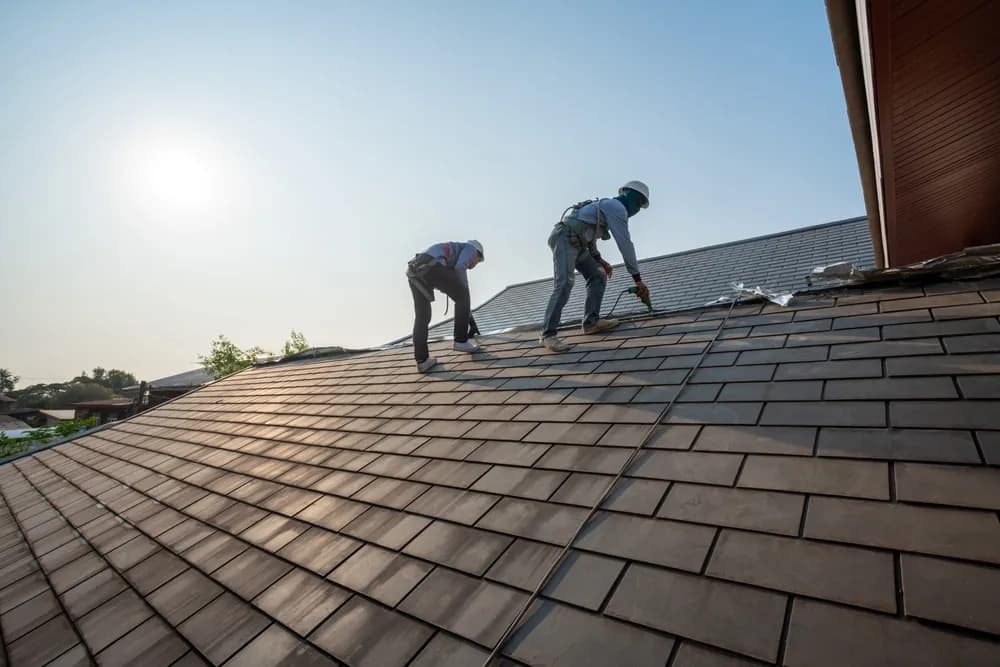
A roofing square is a unit of measurement equal to 100 square feet of roof area. It's the standard unit that roofing contractors use to measure roofs, calculate material quantities, and price jobs. When a roofer says your roof is "25 squares," they mean your roof covers 2,500 square feet of surface area.
Understanding how roofing squares work helps you read estimates accurately, compare contractor pricing, and understand the scope of your roofing project.
Why Roofers Use Squares Instead of Square Feet
Roofing materials are manufactured, packaged, and sold in quantities designed around the square. A bundle of architectural shingles covers roughly one-third of a square, so three bundles equal one square. Rolls of underlayment, ice and water shield, and other accessories are also sized in square-based increments.
Using squares as the base unit simplifies material ordering and pricing. Instead of saying "I need enough shingles for 2,500 square feet," a roofer says "I need 25 squares of shingles." The supply house knows exactly how many bundles that is. It also makes cost comparisons easier — when a contractor quotes $350 per square installed, you can quickly multiply by the number of squares to estimate total cost.
How Roofers Measure Your Roof
Measuring a roof involves calculating the total surface area of all roof planes, including accounting for slope (pitch). There are several methods contractors use:
Physical Measurement
The traditional method involves a roofer climbing onto the roof with a tape measure. They measure the length and width of each rectangular section, calculate the area of each section, and add them together. Triangular sections (like gable ends), hip sections, and dormers each get measured and calculated separately.
Satellite/Aerial Measurement
Many modern contractors use aerial measurement services like EagleView or GAF QuickMeasure. These services use satellite imagery and aerial photography to create a detailed report of the roof's dimensions, including area, pitch, ridge length, valley length, eave length, and waste factor. These reports are typically accurate to within 1-2 percent and save the time and safety risk of climbing on the roof.
Ground Measurement with Pitch Factor
A less common but sometimes useful method involves measuring the building's footprint from the ground (length times width), then applying a pitch multiplier to account for the slope. A steeper roof has more surface area than a flat roof over the same footprint. A 6/12 pitch (moderate slope) has about 12 percent more area than the footprint, while a 12/12 pitch (45-degree angle) has about 41 percent more.
What Affects the Number of Squares?
Two homes with the same floor plan can have very different roof measurements. Several factors affect total square count:
Roof Pitch (Steepness)
Steeper roofs cover more surface area. A one-story ranch home with a low 4/12 pitch might have 18 squares, while the same footprint with a steep 10/12 pitch could have 23 squares — a significant difference in material and labor costs.
Roof Complexity
A simple gable roof (two flat planes meeting at a ridge) is straightforward to measure. Complex roofs with multiple hips, valleys, dormers, and varying heights have more surface area and more waste. A complex roof might measure 10-15 percent more squares than a simple roof over the same footprint.
Overhangs (Eaves and Rakes)
The roof extends past the exterior walls — this overhang adds to the total area. Standard overhangs of 12-18 inches don't add dramatically to the square count, but they do add up on larger homes.
Waste Factor
Contractors add a waste factor to the measured area to account for shingle cuts and unusable partial pieces. Simple roofs typically need 5-10 percent waste, while complex roofs with many cuts and angles may need 12-15 percent. This waste factor is part of the material calculation but is usually included in the per-square price rather than listed as extra squares.
How Squares Affect Your Roofing Estimate
When you receive a roofing estimate, the square count is the primary driver of cost. Here's how it typically breaks down:
Material cost per square varies by shingle type:
- 3-Tab shingles: $70-100 per square (materials only)
- Architectural shingles: $90-150 per square
- Designer/premium shingles: $150-400+ per square
Installed cost per square (materials plus labor, tear-off, disposal) typically runs:
- $300-400 per square for 3-tab
- $350-550 per square for architectural
- $500-900+ per square for designer
So a 25-square roof with architectural shingles might cost $8,750-$13,750 installed. These are rough ranges — actual pricing depends on your location, roof complexity, the specific products chosen, and the contractor.
Common Roof Sizes in Squares
To give you a frame of reference for typical residential roofs:
- Small home (1,000-1,200 sq ft): 12-16 squares
- Average home (1,500-2,000 sq ft): 18-25 squares
- Large home (2,500-3,500 sq ft): 28-40 squares
- Very large home (4,000+ sq ft): 40-55+ squares
These are approximate ranges. A two-story home will have fewer roof squares than a one-story home with the same total square footage, because the second story sits under the first floor's roof rather than adding more roof area.
Bundles vs. Squares
When shopping for shingles at a home improvement store, you'll see them sold by the bundle. The relationship between bundles and squares depends on the shingle type:
- 3-Tab shingles: 3 bundles = 1 square
- Standard architectural shingles: 3 bundles = 1 square
- Heavy designer shingles: 4-5 bundles = 1 square (because the shingles are thicker and heavier, fewer fit in each bundle)
The bundle-to-square conversion is always printed on the packaging, so you don't have to guess.
Questions to Ask About Your Estimate
When reviewing a roofing estimate, these questions about squares and measurement can help you understand the proposal:
- How was my roof measured? Physical measurement or aerial report? Can you see the measurement documentation?
- What's the total square count? This should be clearly stated on the estimate.
- What waste factor is included? 5-15 percent is normal depending on roof complexity.
- What's the per-square price? If the estimate only shows a lump sum, asking for the per-square breakdown helps you compare quotes.
- What's included in the per-square price? Materials, labor, tear-off, disposal, underlayment, flashing, and cleanup should all be included.
Get an Accurate Measurement and Estimate
Peak Roofing provides detailed estimates that clearly show your roof's square count, the materials being used, and all associated costs with no hidden fees. We use professional measurement technology to ensure accuracy.
Call us at (704) 313-9341 or request your free estimate online.
Need Help with Your Roof?
Contact Peak Roofing today for a free roof inspection and estimate. Our experienced team is here to help Charlotte homeowners.